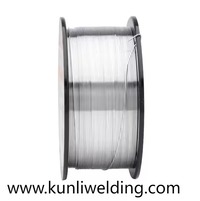
In workshops where craftsmanship and manual skill still define quality, the discussion around Aluminum TIG Welding has shifted toward finer details that affect hand control. Among these details, Aluminum Tig Wire Suppliers are increasingly evaluated not only on alloy range and availability, but also on how consistently straight their wire arrives at the welder's bench. Straightness may seem subtle, yet it has a direct influence on how smoothly a filler rod can be guided into the weld pool during precise manual work.
Manual TIG welding depends on rhythm. The welder's hands coordinate torch angle arc length and filler introduction in a continuous motion. When a wire has curvature memory from poor processing or packaging, the operator must compensate with additional wrist movement. This extra adjustment breaks concentration and introduces variability. In contrast, wire that maintains a uniform straight profile responds predictably to finger pressure and positioning, supporting steadier deposition and calmer hand movement.
Recent conversations around skilled labor shortages have highlighted the importance of reducing unnecessary physical strain on experienced welders while also making the craft more approachable for newer hands. Straight filler wire supports both goals. Less resistance and fewer sudden bends reduce fatigue during long shifts and shorten the learning curve for trainees who are still developing muscle memory. In an environment where retaining talent matters as much as equipment investment, such details take on broader relevance.
Wire straightness begins long before it reaches the shop floor. Drawing processes tension control and post processing alignment all influence how the rod behaves once unpacked. Suppliers who manage these steps carefully tend to deliver wire that lies flat when placed on a table rather than springing into arcs. This physical behavior directly translates to the torch hand where even minor resistance can cause overfeeding or hesitation.
The impact is especially noticeable in out of position welding. When working on vertical or overhead joints gravity already complicates filler control. A straight wire allows the welder to focus on puddle observation rather than fighting the rod's tendency to wander. In such scenarios consistent straightness improves confidence and reduces the likelihood of uneven bead appearance that requires later correction.
Cleanliness and straightness are closely linked. Wire that is handled gently and packaged to preserve alignment is often also better protected from surface damage. Nicks or twists can snag gloves or disrupt feeding into the arc. Smooth straight rods slide naturally between fingers enabling precise timing when dipping into the molten pool. This tactile feedback is essential for artisans who rely on feel as much as sight.
The discussion also intersects with current attention to quality assurance and traceability. Fabricators serving sectors where visual consistency matters understand that bead uniformity reflects process control. Straight filler wire supports repeatable hand motion which in turn leads to more consistent surface appearance. While automation receives much attention manual TIG welding remains vital for custom work repairs and complex assemblies where human judgment cannot be replaced.
From a productivity perspective reduced hand correction saves time. Small pauses to realign a curved rod accumulate over long welds. Straight wire supports a continuous flow allowing welders to maintain pace without rushing. In busy shops balancing throughput and craftsmanship this contributes to smoother scheduling and fewer interruptions.
Supplier communication plays a role here. Clear guidance on packaging storage and handling helps preserve straightness until use. Some shops have adapted storage racks that support rods along their full length preventing sagging or accidental bending. These practices align with a broader industry focus on preventive measures rather than reactive fixes.
As sustainability and waste reduction remain prominent topics, minimizing rejected welds and rework is part of responsible manufacturing. Straight filler wire contributes by reducing accidental defects caused by inconsistent hand feeding. Fewer rejected parts mean less material waste and lower energy use over time reinforcing operational responsibility without dramatic process changes.
Choosing a supplier therefore involves more than checking alloy listings. Evaluating how wire is produced packaged and supported after delivery provides insight into how it will perform in the welder's hands. When suppliers understand the realities of manual TIG work their products align more closely with real shop needs rather than abstract specifications.
Ultimately straightness is about respect for the craft. It acknowledges that manual welding is a skilled discipline where small physical details influence outcomes. As shops invest in training and seek stability in their workforce selecting wire that supports human control is a practical decision grounded in daily experience. For a closer look at aluminum alloy wire options and supplier approaches to handling and consistency visit https://www.kunliwelding.com/ .