The foundation of any successful industrial operation is the reliability of its equipment. In sectors such as steel production, mining, and large scale manufacturing, machinery is often subjected to extreme loads and continuous operation. In these environments, the failure of a single bearing can lead to a domino effect of mechanical issues, resulting in significant financial losses. To combat this, industry leaders have moved away from reactive maintenance and toward sophisticated, automated solutions that provide constant protection to every moving part of their infrastructure.
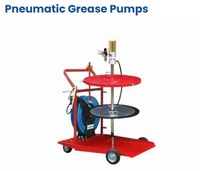
The introduction of the electrical grease pump has revolutionized the way facilities approach the challenge of friction management. An electrical grease pump serves as the heart of a centralized lubrication system, pumping lubricant from a central reservoir to multiple points across a machine or an entire production line. This grease pump technology ensures that lubrication is not an afterthought but a controlled, integral part of the operational cycle. By maintaining a constant internal pressure within the lubrication points, these systems effectively seal out dust and moisture, which are the primary causes of premature bearing wear.
Accuracy is perhaps the greatest benefit of an automated approach. In many industrial settings, the quantity of grease required for a specific bearing is measured in grams. A manual operator, regardless of their experience, cannot consistently deliver such precise amounts across hundreds of points. An automated pump, however, is calibrated to deliver the exact volume required, preventing the issues of heat buildup associated with over greasing. This precision ensures that the lubricant performs its function of reducing friction without causing secondary mechanical stress.
From a management perspective, the scalability of these systems is a major advantage. Whether a facility is operating a single conveyor belt or a massive network of interconnected machines, an automated lubrication system can be designed to fit the scale. Multiple pumps can be synchronized to work together, providing a comprehensive lubrication solution that covers every critical component. This scalability allows businesses to grow their maintenance infrastructure alongside their production capacity, ensuring that new assets are protected from the moment they are installed.
The transition to automated systems also reflects a broader trend toward sustainability in industry. By optimizing the use of lubricants, companies reduce their overall chemical footprint. Less grease is wasted, and fewer components are discarded due to avoidable wear. This not only saves money but also aligns with global efforts to reduce industrial waste and promote the responsible use of resources. The longevity of equipment protected by a high quality pump means that fewer raw materials and less energy are required to manufacture replacement parts over the life of the facility.
Safety protocols are also significantly enhanced through the use of these pumps. By reducing the frequency with which technicians must interact with active machinery, the risk of workplace accidents is lowered. Many systems are designed to be refilled from a single, easily accessible location, further reducing the need for staff to navigate complex or elevated structures. This focus on safety helps companies maintain a healthy workforce and avoid the legal and operational complications that follow workplace injuries.
As we look toward the future of industrial automation, the role of smart sensors and connectivity will continue to expand. Future iterations of lubrication pumps will likely feature even more advanced diagnostic capabilities, allowing them to communicate directly with plant wide management software. This will enable even more refined control over the maintenance process, with systems capable of adjusting their own parameters based on the real time operating conditions of the machinery they protect.
In summary, the electrical grease pump is much more than a simple tool; it is a critical component of a modern, efficient, and safe industrial environment. By providing a reliable and precise method for grease pump application, these systems ensure that machinery can operate at its maximum potential for the longest possible time. For any business that relies on mechanical performance, the investment in automated lubrication technology is an investment in the future stability and success of the organization.