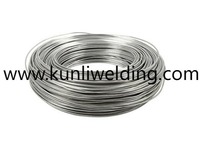
Aluminum shipyards now weld entire ferry decks robotically in single shifts and offshore platforms run MIG guns twenty-four hours straight. One tiny hesitation in wire feeding stops the torch, breaks the rhythm, and turns a profitable day into overtime. Aluminum Mig Wire Manufacturers who treat the spool as an afterthought create these expensive interruptions, while those who engineer every layer deliver wire that disappears into the feeder and never looks back.
The trouble always starts the same way. A random-wound spool looks fine on the pallet, but the moment the wire leaves the reel, cast and helix wander. The loops coming off the top grow larger, then suddenly smaller. The soft aluminum wire kinks, bird-nests inside the liner, and the gun freezes twenty meters from the weld. Robots stop, alarms sound, and welders spend the next thirty minutes pulling twisted wire out of the conduit like fishing line from a reel.
Precision layer-wound spools eliminate that drama completely. Each turn sits exactly beside the previous one, row upon perfect row, like books on a shelf. The cast stays constant from the first meter to the last. The wire pays off smoothly whether the spool spins at ten meters per minute on a robot or thirty on a manual gun chasing block closure welds.
Plastic spools matter as much as winding pattern. Cheap fiberboard reels absorb moisture in humid yards and swell. The layers tighten, payoff tension spikes, and the wire drags. The arc shortens, penetration suffers, and lack-of-fusion defects appear only after radiography. Solid plastic reels with precise hub dimensions never change shape. They spin freely even after months on salt-soaked docks.
Basket spools versus drum spools create another choice point. Fifteen-kilogram baskets drop into most shipyard feeders without adapters. The open design lets welders see remaining wire at a glance and prevents the dreaded empty-spool surprise halfway through a long seam. Larger drums suit fixed robotic cells running kilometers per shift, but only when the manufacturer controls winding tension so the wire does not bury itself under its own weight.
Payoff geometry decides everything in practice. Poorly designed spool side plates allow wire to slip sideways and tangle between layers. Precision-machined flanges with smooth radii guide every loop back into perfect order. The wire never dives under previous layers, never jumps the flange, and never forces the drive rolls to fight for grip.
Surface finish on the spool matters too. Rough plastic or sharp edges shave tiny aluminum particles that clog liners and contact tips. Smooth, polished surfaces let the wire glide without creating debris. Yards running twenty-four-hour robot cells change tips once per shift instead of every few hours.
Weight distribution affects balance at high speed. Random-wound spools sometimes have heavy spots that vibrate as they spin. The vibration travels down the conduit and makes the torch dance. Perfectly balanced layer-wound reels spin silently even at maximum wire-feed speed, letting seam-tracking lasers stay locked on the joint.
Storage between shifts reveals another advantage. Spools left on the feeder overnight in humid air collect condensation on fiberboard cores that later transfers to the wire. Solid plastic cores stay dry, and the sealed factory wrap keeps moisture out until the welder tears it open in the morning.
Tapered versus straight hubs solve the final feeding puzzle. Some feeders grip better with tapered hubs that center the spool perfectly. Others prefer straight hubs with locking collars. Manufacturers who offer both types let yards standardize on one wire brand regardless of equipment mix.
Welders notice the difference in seconds. The gun feels lighter, the arc sounds steady, and the bead stays uniform from start to finish. Foremen notice when robots finish entire hull blocks without a single stop. Management notices when tip consumption drops and overtime disappears.
Aluminum Mig Wire Manufacturers who master spool design also tend to master wire drawing and cleaning. The same attention that produces perfect payoff usually means round wire with consistent diameter and no surface scratches. Customers quickly learn that a spool engineered like precision tooling almost always contains wire ready for the toughest marine joints.
Every ER5183 listing shows the actual plastic precision spool, layer-wound pattern, and balanced hub design used on current ferry and offshore projects. When the next robot cell or manual team needs aluminum MIG wire that feeds so smoothly the welder forgets it is there, the spool photographs and feeding videos waiting at www.kunliwelding.com prove why some Aluminum Mig Wire Manufacturers never give the feeder a chance to complain.